Photographic Resistances
Studio NOVE100's Photographic Manifesto
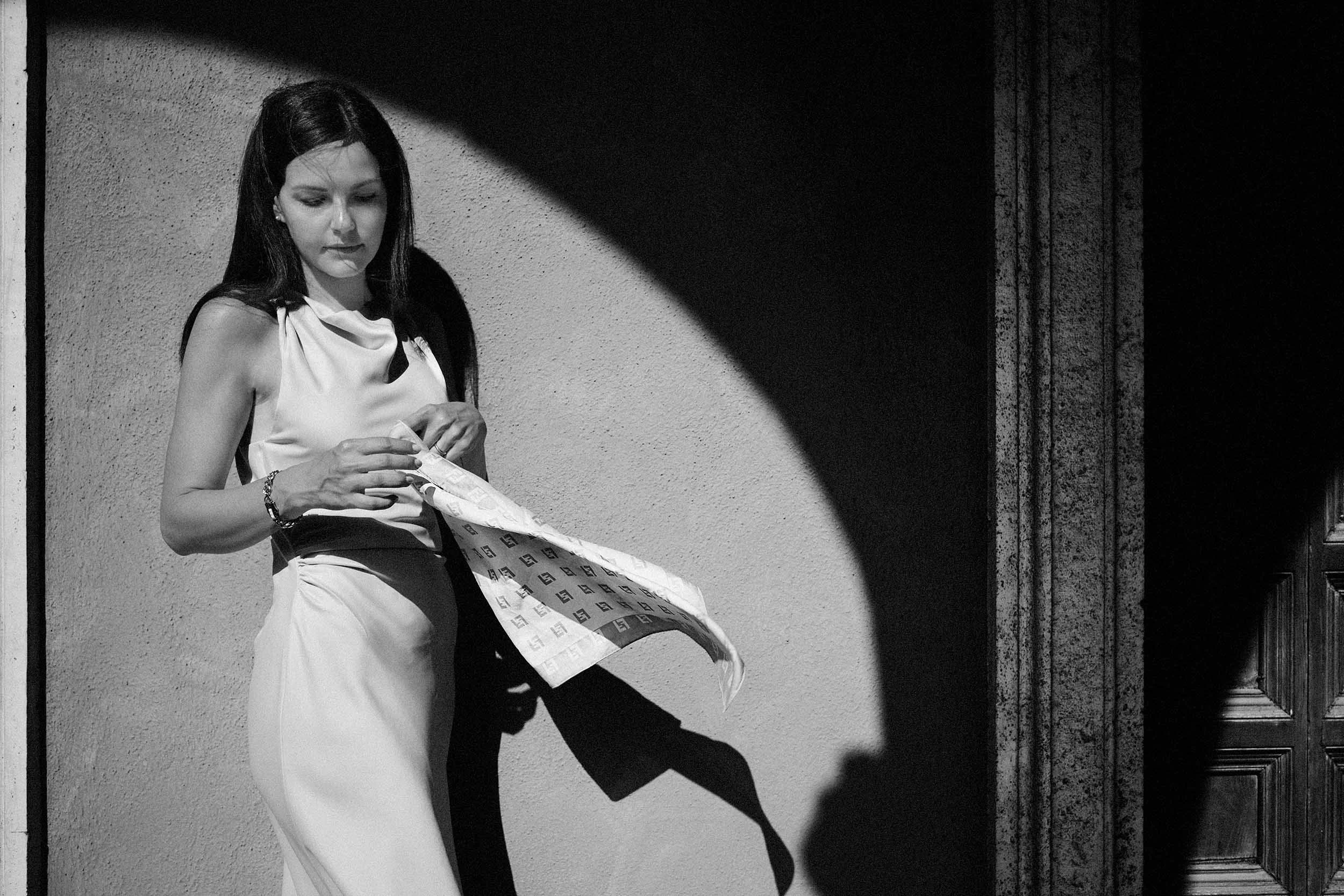
Shadow protects. It does not conceal.
The text below is the foundational Manifesto of Studio NOVE100. It is currently being transformed into an immersive audio experience. "Photographic Resistances" will soon be available as a podcast on all major platforms. Welcome to Shot Zero.
Welcome to Photographic Resistances — my Ampere 7:01 project. I am Federico Zaza, and this is our "shot zero."
Before loading our first roll of film, before taking the first photograph of this journey — a journey I hope will be shared — we must establish the rules of this space. We must understand in which direction we are moving and, above all, why.
The path we are about to undertake together will cross two phases. We will begin by using black and white as a scalpel: we will deconstruct the architecture of poses, seek out the crack, and bring down the mask to rediscover the subject—naked, vulnerable. In a word: human.
Faced with this fragility, the market's temptation is to hide it, to seize it and throw it under a spotlight so blinding that it eliminates any difference, any personal peculiarity. Illuminating to hide everything; illuminating everything to reassure the viewer. But this is not what we will do. In this podcast, we will claim the right to color and light only after having completely understood the darkness. Because in order to photograph — to truly photograph — we must, paradoxically, learn to descend into the dark.
Let’s start from a field we know quite well: contemporary wedding photography. Not because this is a podcast about weddings, but because the wedding industry today is Patient Zero of a global visual disease. It is there that a purely functional aesthetic dominates with the utmost ferocity, though the symptoms are everywhere. It is an approach dominated by absolute coldness: there is a sort of clinical obsession with flat, diffused, omnipresent light. A tyrannical light that must invade every millimeter of the scene. It allows no mystery, no depth. It is a violent light because it exposes everything mercilessly, excessively; it overexposes, burns away volumes, and turns people into identical postcards, devoid of weight and substance.
But a light that illuminates everything equally, so violently and overexposed, is effectively a blind light; it tells no story. It is white noise. In truth, it is the perfect way to hide everything. To hide the essence, the personal diversities, the psychologies, and the stories that each of us holds and tells differently.
This space, this podcast, was born precisely to deconstruct this alienation. And above all, this uniformization that is now total, absolute, in any field, in any market, in any space we navigate. Just think about how much Instagram has homogenized photography. It has been a drama based on basic filters that flattened aesthetics toward an absolute, shared, globalized mediocrity. This, in effect, has caused any form of authorship to disappear.
This is clearly a podcast dedicated to photography, but the discourse entirely embraces the world we inhabit right now. It is a world that is becoming increasingly homogenized and homogenizing, whether in photography, luxury hospitality, dining, or any cultural field. The tragedy we are experiencing in this era is that everything is flattening out according to shared standards — increasingly shared, and therefore increasingly impersonal.
But let’s take a step back. I believe that to dismantle this empty aesthetic, we must cling to much older foundations, to our cultural and social roots. We must return to the absolute origin. The Greeks, from this point of view, hand us a perfect paradox. In Hesiod’s Theogony, in the beginning, there is Chaos, the chasm. From there emerge two unfathomable entities, primordial in every sense: Erebus and Nyx. Erebus, the deepest darkness of all, absolute obscurity. And Nyx, the darkness of the night, the absolute night. Think about it: absolute black joining with another absolute black. And yet, it is exactly from this union that the unimaginable, the unthinkable happens.
From the union of Erebus and Nyx does not emerge an even thicker darkness. Hemera, the day, and Aether, the absolute light, pure clarity, are born. Light is not the opposite of darkness; it is its direct descendant.
Let us reflect on this, we photographers, because this myth is the very essence of photography. In photography, it is not light that defines itself. It is the shadow that gives it form. What tells us if a light is hard or if it is soft? It is not the power of the spotlight or the flash. It is the transition of the shadow. It is the way the darkness decides to yield. It is the dark border that sculpts the face, that defines the cheekbone, that gives gravity to a body. Without the resistance of the shadow, light has no body; it is just a white avalanche that erases reality, erases beauty, erases uniqueness.
But the shadow does much more than sculpt form. The shadow protects. There is an instant, a precise instant in the Iliad, that forever overturns visual hierarchies. Hypnos, the god of sleep, makes a fatal mistake and infuriates Zeus. Zeus wakes up; he is the king of the sky, the master of lightning, the absolute light that destroys. He searches for Hypnos to kill him. And what does Hypnos do? The only thing he can do: he hides within the folds of the cloak of his mother, Nyx, the night, the primordial darkness. And here the unthinkable happens: faced with the deep dark, Zeus, the undisputed master of light, stops. He lowers his gaze, abandons his vengeance, because he feels a reverential and unspeakable terror of the original shadow. He cannot afford to enter there.
This is the true authorial photography we will seek in every single roll of this podcast. And I would like us to do it together, joining your gaze with mine. When we decide to crush the blacks, when we let a part of our subject slip into the dark, into the unexplored dark, we are not exposing incorrectly. Nor are we trying to hide anything. We are making a supreme ethical choice: the shadow protects, it does not conceal, it does not hide. It creates a safe womb where humanity can rest, sheltered from the voracity of the viewer and the tyranny of a market that screams to expose.
Leaving a face or a body in the shadows means revealing its intimacy in a delicate, whispered way. It is a form of storytelling that does not attack, that rejects the scream of omnipresent light to approach the truth... softly. It unveils the essence precisely because it does not illuminate it like day. Our images will find meaning because they will have an absolute black from which to emerge; they will have depth, they will have substance.
From today on, we will stop illuminating to show. We will begin to use the shadow to unveil intimacy. And we will let Aether, the true light, spring forth as a consequence.
This Manifesto is only the threshold. Our visual and philosophical approach is a strictly connected ecosystem. Descend deeper into our Ethos: